
The People Lifecycle: How HR Drives Business Value
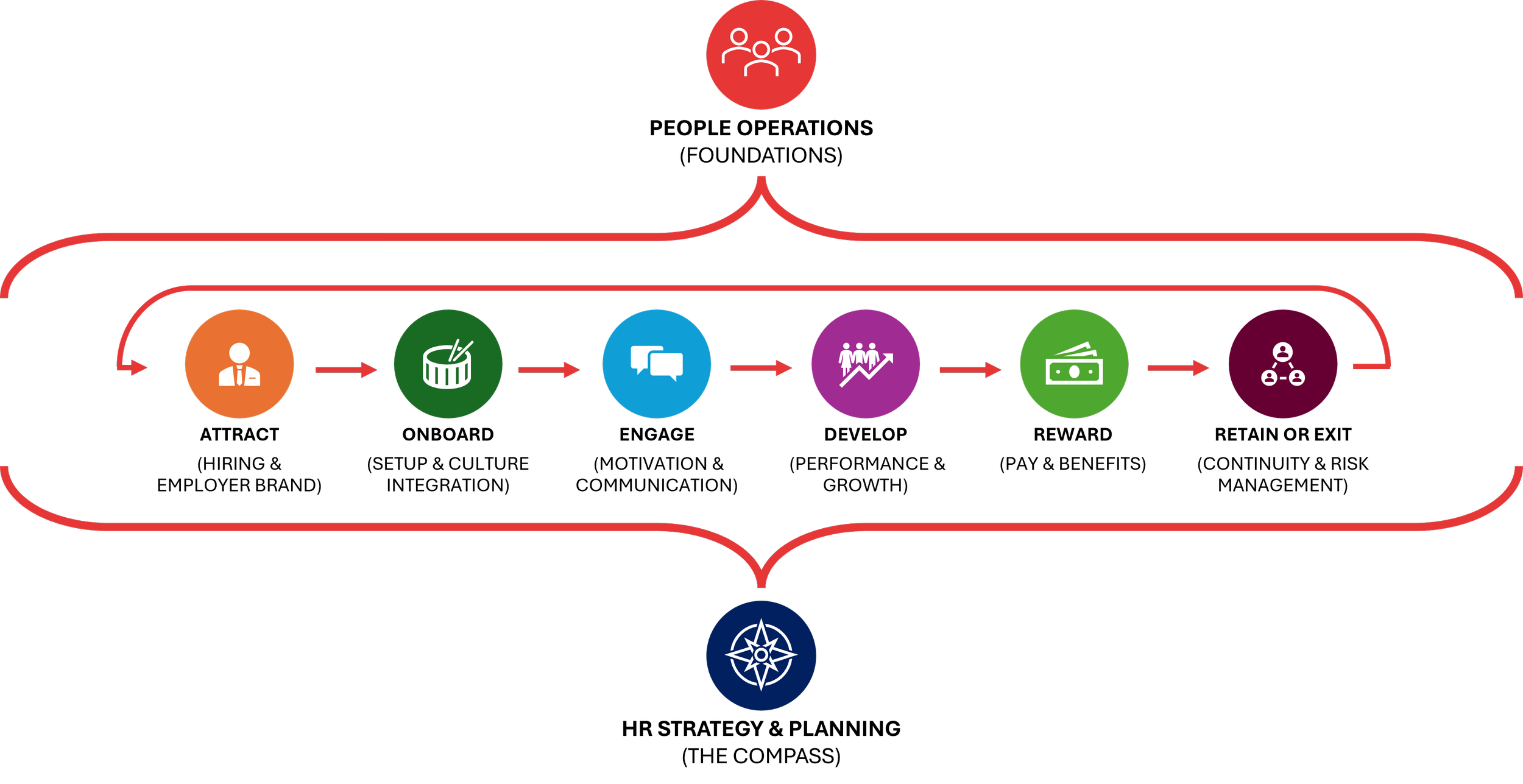
The People Lifecycle: How HR Drives Business Value
Many businesses think of HR as policies, contracts, or handling people problems.
In reality, effective HR is about designing the entire employee journey so that organisations can attract, develop and retain the right people to grow.
This journey is often referred to as the People Lifecycle.
When designed properly, each stage of the lifecycle contributes directly to business performance, culture and long-term growth.
The People Lifecycle
The people lifecycle covers the key stages employees move through during their time with a business.
1. Attract
(Hiring and employer brand)
The lifecycle begins before someone joins the business.
Strong organisations attract talent through clear employer branding, strong hiring processes and well-defined roles.
This includes:
• clear job descriptions
• structured interviews
• strong employer brand
• efficient recruitment processes
Businesses that get this stage right hire better people and reduce hiring mistakes.
2. Onboard
(Setup and culture integration)
First impressions matter.
A structured onboarding process helps new hires integrate quickly, understand expectations and become productive faster.
Good onboarding includes:
• structured induction plans
• clear role expectations
• introductions to teams and systems
• cultural integration
Strong onboarding significantly improves retention and engagement.
3. Engage
(Motivation and communication)
Engagement is about how connected employees feel to the business and its goals.
Clear communication, leadership visibility and supportive management all contribute to engagement.
Businesses typically improve engagement through:
• regular communication
• leadership clarity
• team alignment
• feedback mechanisms
Engaged teams perform better and collaborate more effectively.
4. Develop
(Performance and growth)
Employees perform best when they understand what success looks like and how they can progress.
This stage focuses on:
• performance management frameworks
• career development
• leadership capability
• progression pathways
Companies that invest in development build stronger teams and future leaders.
5. Reward
(Pay and benefits)
Compensation plays a major role in motivation and retention.
Reward strategies should balance competitiveness with financial sustainability.
This typically includes:
• salary benchmarking
• benefits structures
• recognition programmes
• incentive design
Well-designed reward frameworks help businesses attract and retain strong talent.
6. Retain or Exit
(Continuity and risk management)
Not every employee will stay forever, but organisations should manage both retention and exits effectively.
This stage focuses on:
• retention strategies
• succession planning
• exit processes
• knowledge transfer
Handled well, this protects the organisation from disruption and ensures continuity.
The Foundations: People Operations
Supporting every stage of the lifecycle are strong People Operations foundations.
These include:
• HR systems
• policies and governance
• compliance
• people data and reporting
Without these foundations, HR processes become inefficient and difficult to scale.
The Compass: HR Strategy
Above the lifecycle sits HR strategy and workforce planning.
This ensures that people initiatives align with the organisation’s commercial goals.
A clear HR strategy helps businesses answer questions such as:
• What roles do we need to scale?
• How should teams be structured?
• What leadership capability do we need?
• How can we build sustainable growth?
When HR strategy and the people lifecycle work together, organisations create stronger teams and more resilient businesses.
Why the People Lifecycle Matters
Growing companies often experience people challenges as they scale.
Hiring becomes inconsistent, teams lack structure and leaders spend increasing amounts of time managing people issues.
Designing a structured people lifecycle allows businesses to:
• hire more effectively
• improve employee engagement
• develop stronger leadership
• reduce HR risk
• scale sustainably
This is where experienced HR leadership can add significant value.